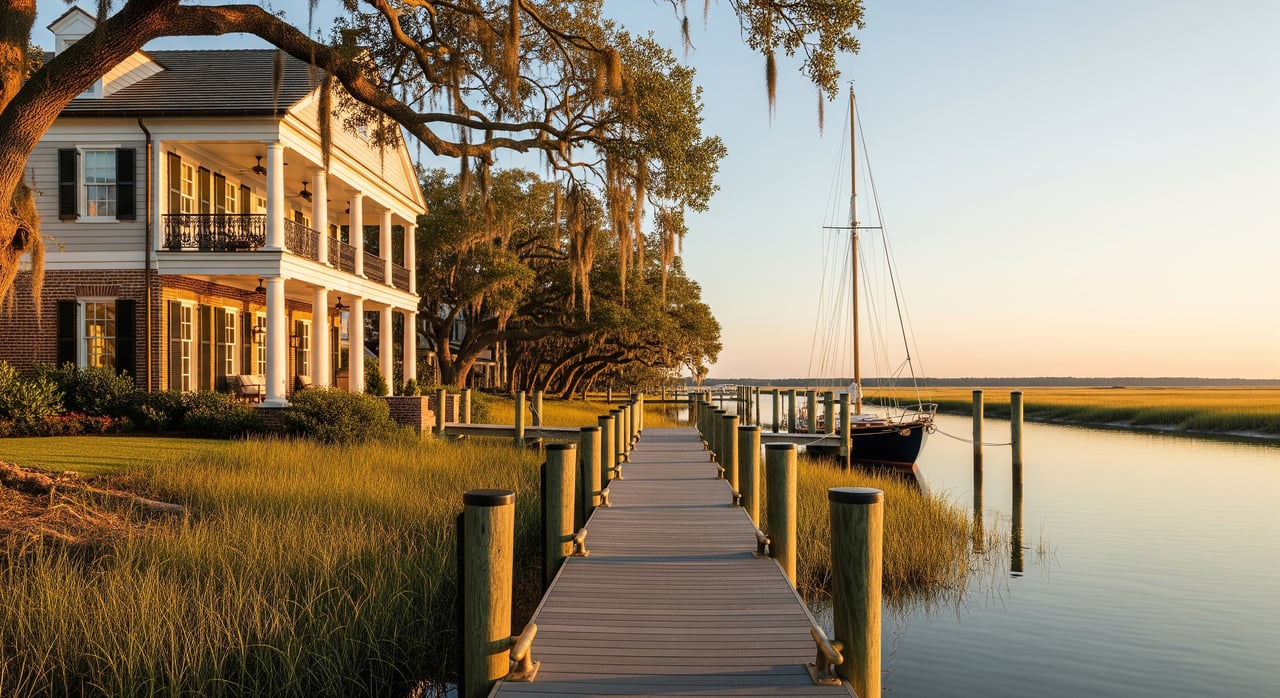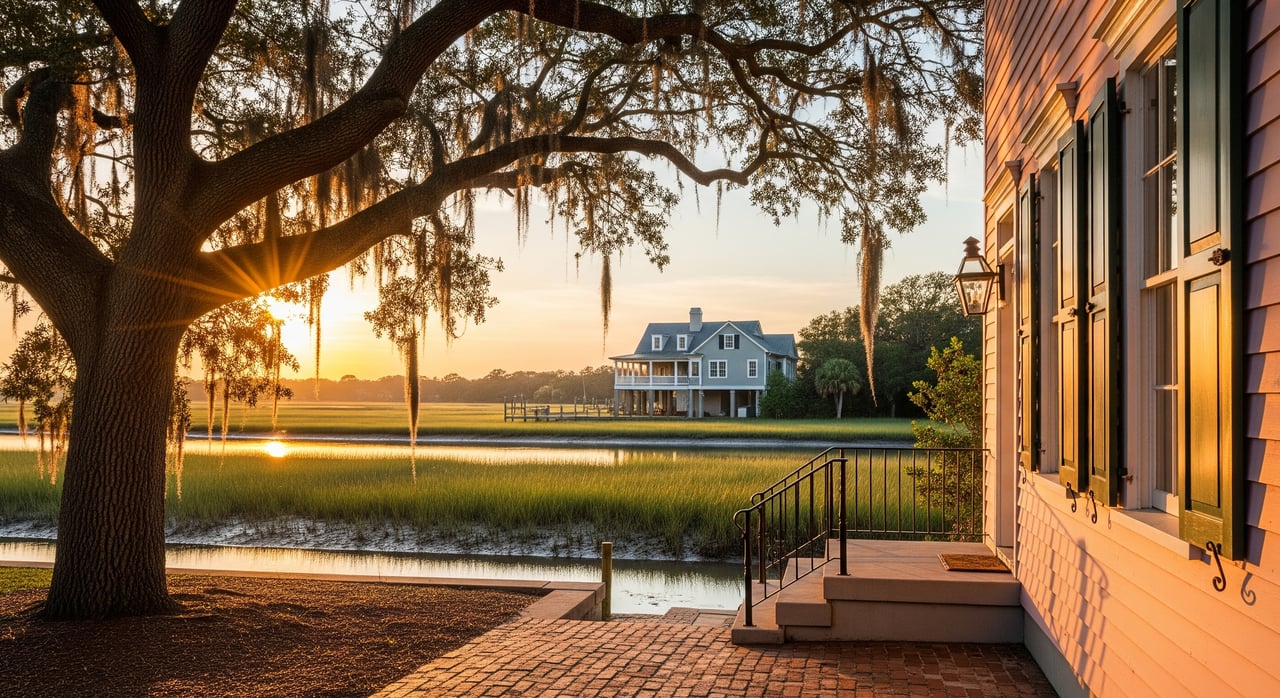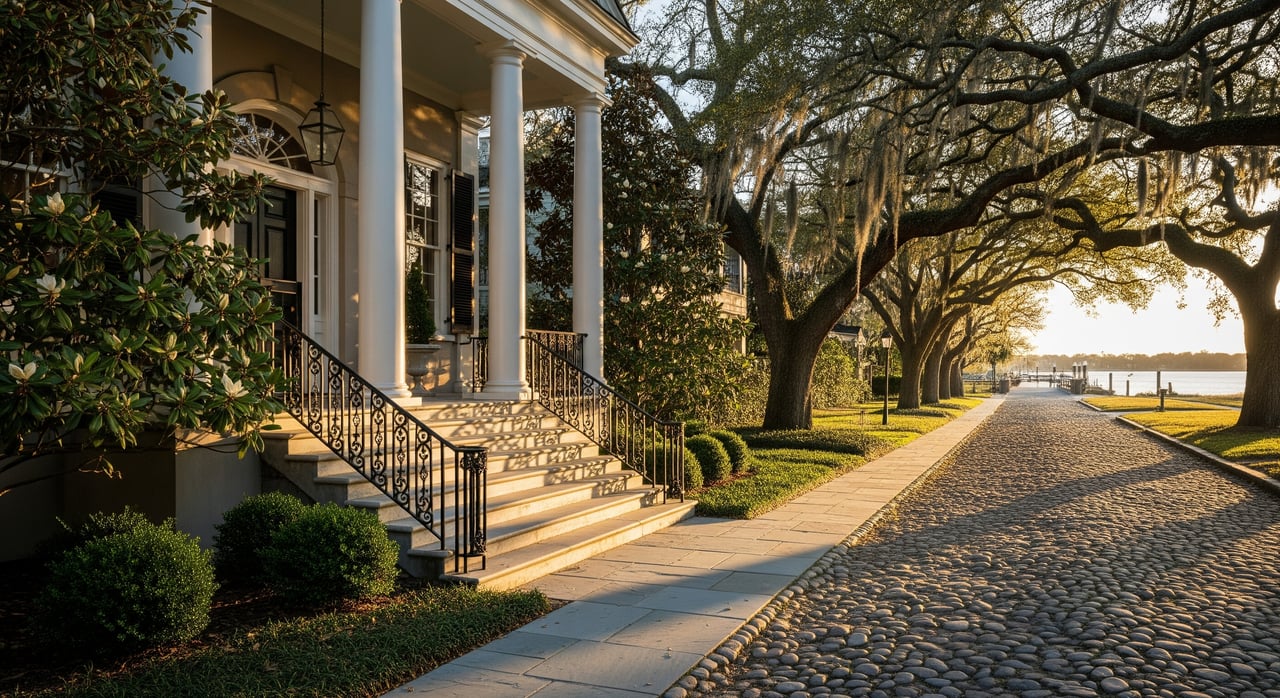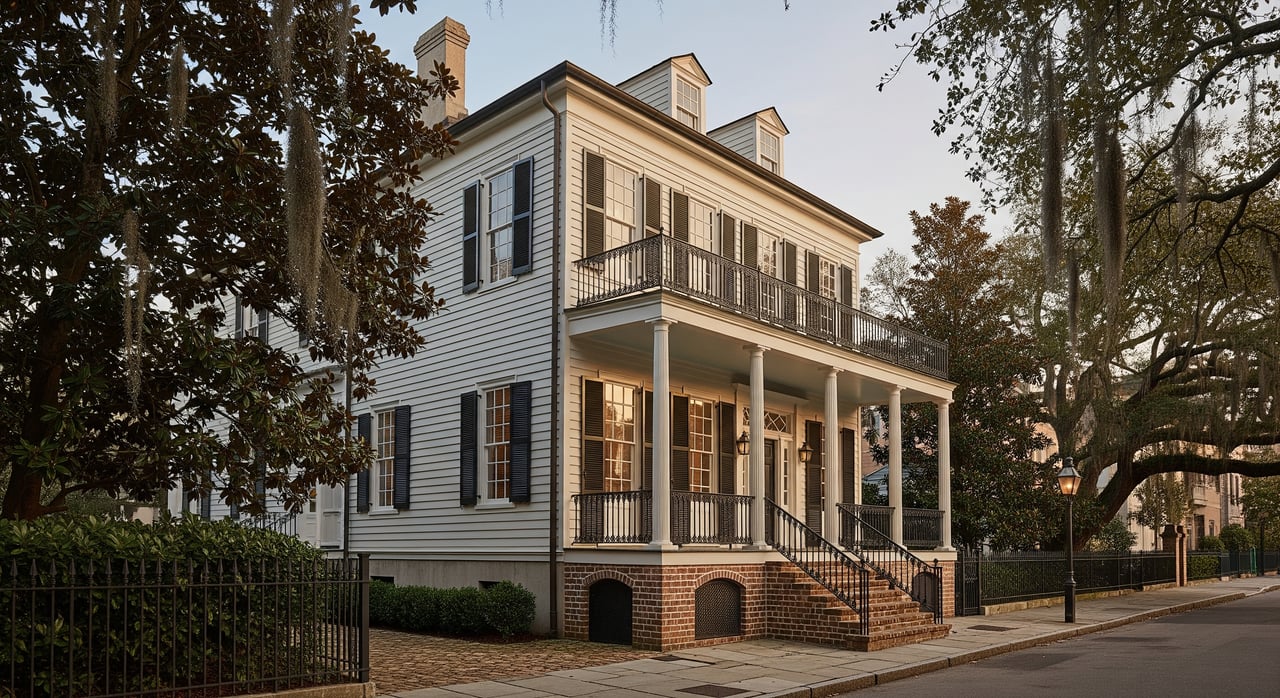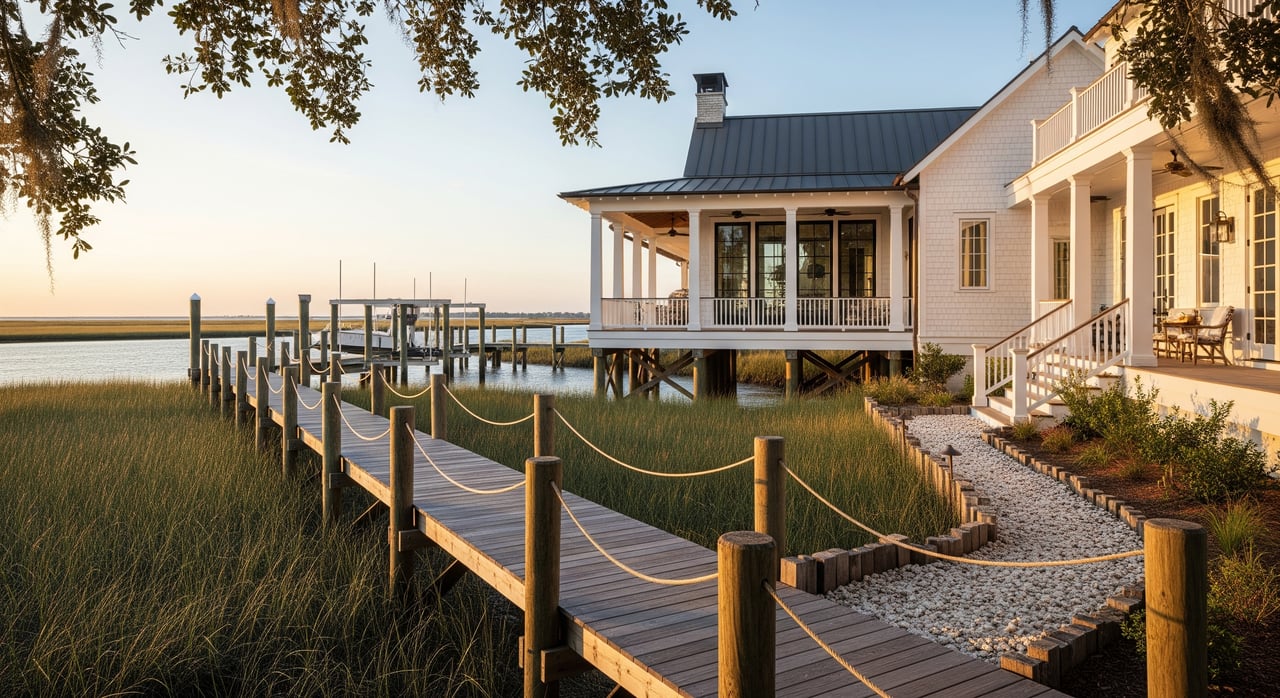
Are you picturing sunsets over marsh grass, a dock on a quiet creek, or a boat ready to run the harbor? Choosing Charleston waterfront starts with understanding how marsh, creek, river, and ocean settings shape your daily life. You want views, access, and long-term confidence before you invest. In this guide, you’ll compare the four main shoreline types, weigh boating and maintenance tradeoffs, and use a clear checklist to shop smarter. Let’s dive in.
Waterfront types at a glance
Marshfront basics
Marshfront homes back up to tidal salt marsh with shallow edges and cordgrass. You get wide views, wildlife, and a natural buffer that softens everyday wave energy. Kayaks, paddleboards, and shallow skiffs shine here, especially on Johns Island and the marshes around Kiawah and Seabrook.
Many marshfront docks sit in very shallow water at low tide. Larger boats generally need a nearby creek or dredged channel to move. Shoreline work often favors living shoreline solutions that use native plants and natural materials, and permits typically run through state and federal agencies.
Tidal creek living
Tidal creeks are the meandering channels that connect marshes to larger rivers. Depth changes with the tide, so access windows matter. In some creeks, you can run a shallow center console at mid to high tide and enjoy quick trips to the river. In others, mudflats emerge at low tide and limit movement.
Expect a more intimate setting and, in narrower creeks, amplified boat wakes. Private docks are common, but some locations see sediment build up over time, which can affect access and require periodic maintenance or dredging permits.
Deep river and harbor
Deepwater sections of the Cooper, Wando, Ashley, and Stono Rivers, along with Charleston Harbor, support larger boats and more consistent access. You will see navigational aids, maintained channels, and proximity to marinas and fuel. This is ideal if you want regular boating, cruising, or fishing with fewer tide constraints.
You trade for more wake exposure from recreational and commercial traffic and more public activity near marinas and waterfront parks. Docks and bank stabilization often require formal permits, and bulkheads and riprap are more common in developed riverfront neighborhoods.
Oceanfront experience
Oceanfront homes face the Atlantic along barrier islands like Isle of Palms, Sullivan’s Island, Folly Beach, and Kiawah. You get direct beach access and a high-energy coastal environment with changing shorelines and strong storm exposure. Insurance, elevation requirements, and dune management are part of ownership here.
Most oceanfront homeowners use nearby marinas or harbor routes for boating, since launching from the beach is not practical. Public beach access and tourism can reduce privacy in season, especially near popular access points.
Quick visuals
Marshfront
Land (yard) | low bank | marsh (cordgrass) | shallow tidal mudflat | marsh creek to river Boat types: kayaks, flats skiff (shallow draft)
Tidal creek
Land lots | bulkheads/docks | narrow channel (tide-dependent depth) | connection to river Boat types: shallow center consoles, skiffs; access limited at low tide
Deep river / harbor
Land lots or marinas | seawall / fixed docks | wide navigable channel | buoyed/federal channel to harbor/ocean Boat types: cabin cruisers, larger center consoles, sailboats (bridge-limited)
Oceanfront
Dune/shoreline | beach | surf zone | open ocean Boat types: offshore-capable vessels; most beach homes use nearby marinas
Boating and access
Tides and windows
Charleston is tidal. Shallow marsh edges and many creeks only allow navigation at mid to high tide. You should confirm mean low-water depths at any dock and along the route to deeper water, and ask sellers about low-tide access history.
For daily use, floating docks help keep smaller boats usable across more of the tide cycle. If you plan dawn fishing or dinner runs, consider how reliable access is at both low and high tide.
Depth, shoaling, and dredging
Deep river and harbor properties often sit near maintained channels. Smaller creeks can shoal, especially after storms, and may need periodic dredging. Private or HOA dredging requires permits and a disposal plan, and costs can vary widely.
If a listing mentions a “recently dredged” or “to be dredged” channel, ask who pays, what permits exist, and how often the work recurs. Federal dredging focuses on major navigation routes, not private laterals.
Bridges and air draft
Bridge clearance is a real factor for tall boats. Larger sailboats may need specific routes to avoid low fixed spans. The Arthur Ravenel Jr. Bridge provides significant clearance on the Cooper River corridor, which is helpful for access to downtown and Daniel Island marinas. Always verify the lowest bridge clearance on your path at mean high water.
Best boat types by location
- Marshfront and small creeks: kayaks, paddleboards, skiffs, flats boats.
- Larger creeks: bay boats and shallow center consoles at mid to high tide.
- Deep rivers and harbor: 25 to 40 plus foot center consoles, cruisers, and sailboats where bridge heights allow.
- Oceanfront: offshore vessels staged at marinas, with ocean runs via harbor inlets.
Wake, privacy, lifestyle
Wake exposure
Oceanfront homes see the most natural wave energy, swell, and storm surge. Deep rivers and the harbor experience wakes from larger recreational and commercial vessels, especially on open reaches with long fetch. Narrow creeks can magnify wakes as they bounce between banks. Marshfront edges feel most protected day to day, thanks to marsh vegetation that dampens waves.
Privacy and activity
Oceanfront areas can feel lively during peak season, and public access points draw beachgoers. Creek areas vary widely. Some, like parts of Shem Creek, have nearby restaurants and charter traffic. Others feel quiet and residential. Deep river settings range from active marina districts to long, private estates. Larger marsh tracts on rural islands often feel the most secluded.
Matching lifestyle
- Frequent boaters who want easy runs to the harbor and marinas often favor deep river or harbor frontage.
- Paddlers, wildlife watchers, and those seeking quiet views often prefer marshfront.
- For a mix of quick fishing trips and social boating to local spots, tidal creek or near-river neighborhoods offer balance.
- Beach-first lifestyles point to oceanfront, with the understanding that maintenance and insurance needs are higher.
Permits and insurance basics
Shoreline stabilization
Common approaches include bulkheads, riprap, and living shorelines. In marsh settings, living shorelines are often preferred by regulators for stability and ecological benefits. You should consult state coastal management and federal permitting before any shoreline work.
Docks, lifts, and approvals
Private docks, piers, and boatlifts generally require state coastal permits, potential federal approvals, and local permissions. In planned communities, covenants may limit dock length, materials, or boat sizes. Clarify what is allowed before you write an offer.
Flood zones and insurance
Charleston County uses FEMA flood maps with zones such as AE and VE. Oceanfront and low-lying sites often carry stricter elevation and insurance implications. Mortgage lenders usually require flood insurance for properties in Special Flood Hazard Areas. Ask for the elevation certificate, verify the current policy cost, and confirm that the home meets elevation requirements for its zone.
Storm exposure and resilience
Barrier islands face the highest direct wave energy and dune erosion during storms. Surge also moves inland on rivers and creeks. Many homes need elevated living areas and site-specific mitigation. Review local building standards and any history of storm damage or repairs.
Buyer checklist
Operations and boating
- Verify mean low-water depth at the dock and along the route to deep water.
- Confirm whether the dock is floating or fixed and how it performs at low tide.
- Map bridge clearances at mean high water for your boat’s air draft.
- Ask about no-wake zones, seasonal traffic, and any commercial routes nearby.
Permits, zoning, and HOA
- Request copies of dock, lift, bulkhead, or shoreline permits and confirm transferability.
- Review HOA covenants for dock length, boat size, and rental use restrictions.
- Confirm local setbacks, critical line location, and conservation buffers on marsh edges.
Shoreline condition
- Identify whether the shoreline is natural marsh, riprap, or bulkhead.
- Ask for any erosion history, emergency repairs, or fill placement records.
- Explore whether a living shoreline is feasible for future stabilization.
Flood and insurance
- Confirm FEMA flood zone and obtain an elevation certificate.
- Review current flood policy premiums and any claims history.
- Ask whether the community receives credits that can reduce premiums.
Environment and lifestyle
- Check for protected species, wetlands, or buffers that affect development.
- Assess nearby uses: restaurants, charter boats, public beach access, or quiet residential character.
- Gauge seasonal tourism impacts, parking, and traffic patterns.
Specialist inspections
- Hire a marine surveyor or engineer to evaluate docks and shoreline structures.
- Use a local surveyor to confirm the mean high-water line and property boundaries.
- Consult a qualified shoreline contractor for maintenance and stabilization estimates.
Which shoreline fits you?
- Choose marshfront if you value calm views, paddling, and privacy, and you run small boats that do not require deep drafts.
- Choose tidal creek if you want a balance of scenic living and short boat runs to the river, and you can plan around tide windows.
- Choose deep river or harbor if boating is central to your lifestyle and you want consistent access and marina services.
- Choose oceanfront if beach life is the priority and you are comfortable with higher maintenance, insurance, and seasonal activity.
Ready to explore the water?
If you are narrowing in on Charleston waterfront, on-the-ground guidance makes all the difference. From dock permits and flood zones to boat routes and neighborhood feel, you deserve clear answers before you buy. For tailored advice and private showings across the Lowcountry, connect with Jack Huguley to Schedule a Free Consultation.
FAQs
What is the difference between marshfront and tidal creek in Charleston?
- Marshfront backs onto shallow marsh that buffers waves and suits paddling and skiffs, while tidal creeks are navigable channels with tide-dependent boat access.
How do tides affect boat access at Charleston waterfront homes?
- In many creeks and marsh edges you can only move boats at mid to high tide, so verify mean low-water depths at the dock and along your route.
What permits do I need for a private dock in Charleston County?
- Docks and lifts typically require state coastal permits and may need federal and local approvals, and HOA covenants can set additional rules.
How do FEMA AE and VE flood zones impact ownership?
- VE and AE zones influence elevation and flood insurance needs, with VE often carrying stricter requirements and higher exposure on oceanfront.
Are wakes and traffic a concern on the Cooper, Wando, and Ashley Rivers?
- Yes, larger recreational and commercial vessels create wakes on open river reaches, so expect more motion than in creeks or marsh edges.
Do tidal creek properties require dredging?
- Some creeks shoal over time and may need permitted dredging, with costs and frequency varying by location and sediment conditions.
What should sailboat owners check before buying on the water?
- Identify the lowest bridge clearance on your route at mean high water and confirm that your mast height and tide windows fit safely.