When you look at Charleston luxury real estate, the biggest mistake is assuming “luxury” means the same thing everywhere. In this market, value is highly local, and two homes with a similar price, size, or finish can perform very differently. If you want to buy wisely or price a luxury property with confidence, it helps to understand what really drives value here. Let’s dive in.
What Counts as Luxury in Charleston?
In Charleston, luxury is best understood as a local tier, not a fixed national number. Realtor.com’s December 2025 Charleston-North Charleston metro report found that the top 10% of listings started at about $1.96 million, while roughly 20% of listings were priced above $1 million. The same report placed the median listing price at $484,000, which shows how distinct the luxury segment is from the broader market.
That gap matters. When luxury homes begin at about four times the local median listing price, you are looking at a separate pricing category with its own buyer pool, expectations, and pace. In Charleston, that means broad market averages only tell part of the story.
The Institute for Luxury Home Marketing’s 2025 review supports that point. In its Charleston results, luxury single-family homes posted a median list price of $1.77 million, a median sold price of $1.50 million, and 36 days on market. Luxury attached homes showed a median list price of $1.21 million, a median sold price of $1.08 million, and 37 days on market.
Why Location Carries So Much Weight
In Charleston, location is not just about convenience. It is often the main driver of luxury value. The local market includes historic areas, waterfront settings, established commercial corridors, and limited land in highly sought-after coastal locations.
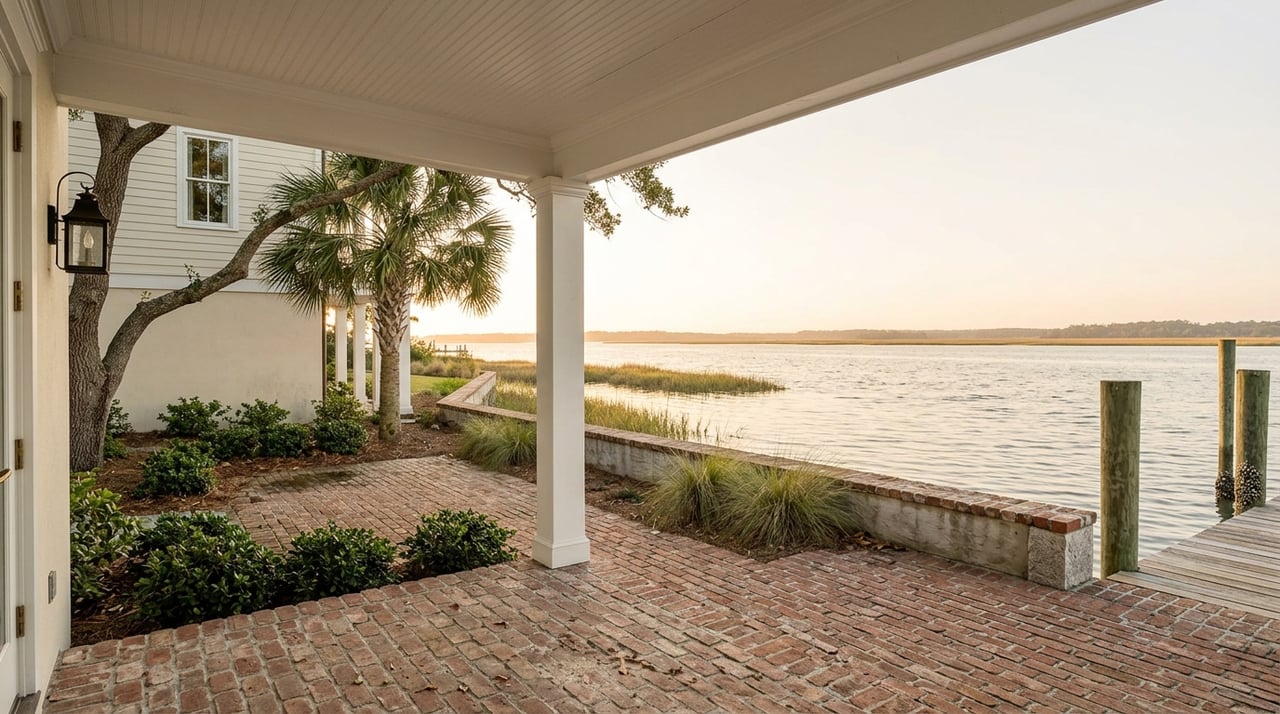
Realtor.com’s luxury reporting notes that coastline proximity, waterfront access, views, and limited developable land create sharp price differences across the Charleston area. That helps explain why homes that look comparable on paper may command very different prices in person. A stronger view corridor or a better waterfront position can move value significantly.
For buyers, this means square footage alone is not enough. For sellers, it means your home should be priced against properties with truly similar location attributes, not just similar bedroom counts or finishes.
Water Access, Views, and Scarcity
Charleston luxury buyers often pay for features that cannot be easily recreated. Water access, harbor or marsh views, and a setting near established historic or coastal areas are all examples of value tied to scarcity. Once a home has those attributes, the market tends to treat them differently than interior upgrades alone.
This is one reason Charleston luxury can feel so segmented. A property with direct water access or a protected view may sit in a much narrower competitive set than another home a few streets away. In practical terms, location-based scarcity often supports stronger pricing than cosmetic improvements by themselves.
Flood Exposure Can Affect Value
Flood exposure is a real part of Charleston home values, especially in the luxury tier. The City of Charleston states that AE and VE zones are inside the Special Flood Hazard Area, where floodplain regulations apply and mandatory flood insurance purchase rules can apply. The city also requires freeboard above base flood elevation in regulated flood zones.
Just as important, the city notes that areas outside FEMA flood zones can still face local drainage issues, unmapped flood hazards, or sea-level-rise risk. That means flood considerations are not limited to one map label. Buyers often look beyond whether a property is technically inside or outside a regulated zone.
In a luxury sale, perceived flood exposure can influence buyer confidence, insurance expectations, and overall pricing. Two homes with similar design and condition may not be valued the same if one offers stronger elevation, fewer flood concerns, or a lower-risk feel.
Historic Character Matters in Charleston
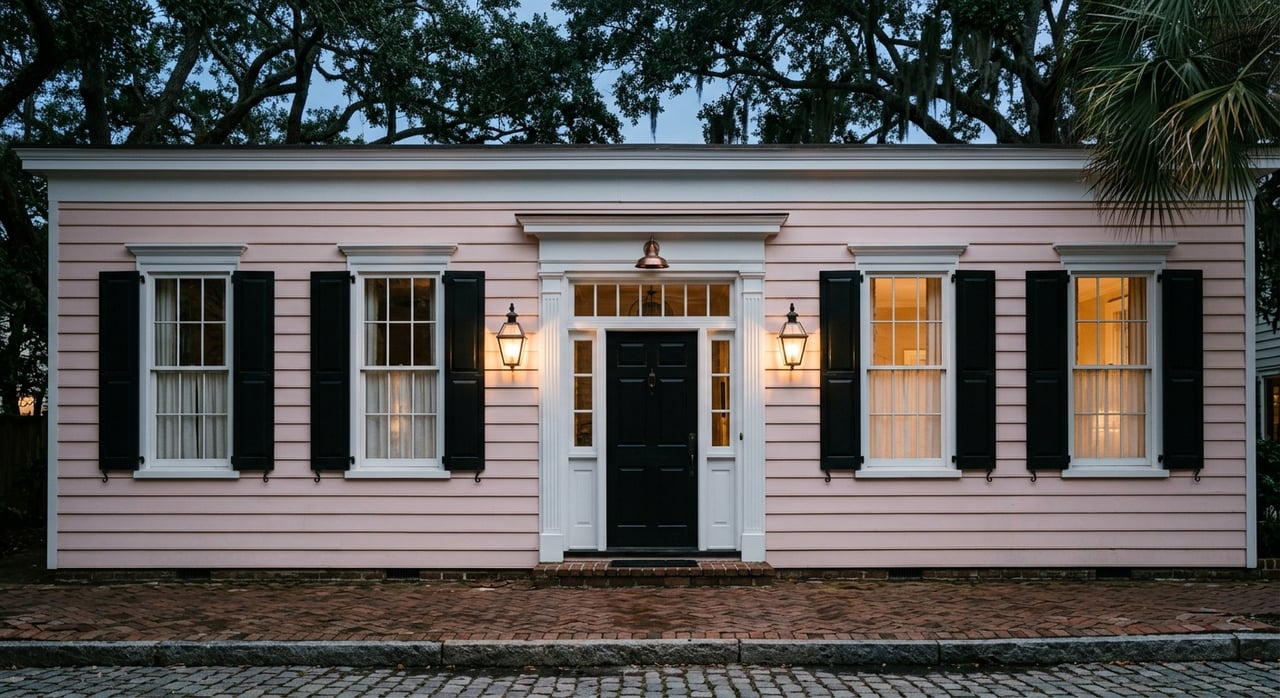
Charleston luxury value is also shaped by architecture and historic integrity. In the city’s historic districts, the Board of Architectural Review oversees new construction, alterations, renovations visible from the public right-of-way, and certain demolitions. Its stated purpose is to preserve and protect historic or architecturally worthy structures and areas.
That matters because buyers in Charleston often place real value on authenticity. A home’s architectural character is not just aesthetic. In many cases, it is part of the property’s market identity and long-term appeal.
The City of Charleston’s Charleston Standards reinforce this approach. The standards emphasize preserving historic character, retaining craftsmanship, repairing rather than replacing historic features when possible, and making additions or exterior changes sympathetic to the original structure.
Not Every Renovation Adds the Same Value
In Charleston’s luxury market, a renovation can help value, but quality and fit matter. Fannie Mae’s appraisal guidance treats condition, construction quality, and level of updating as core valuation factors. It also distinguishes between homes that are not updated, updated, and fully remodeled.
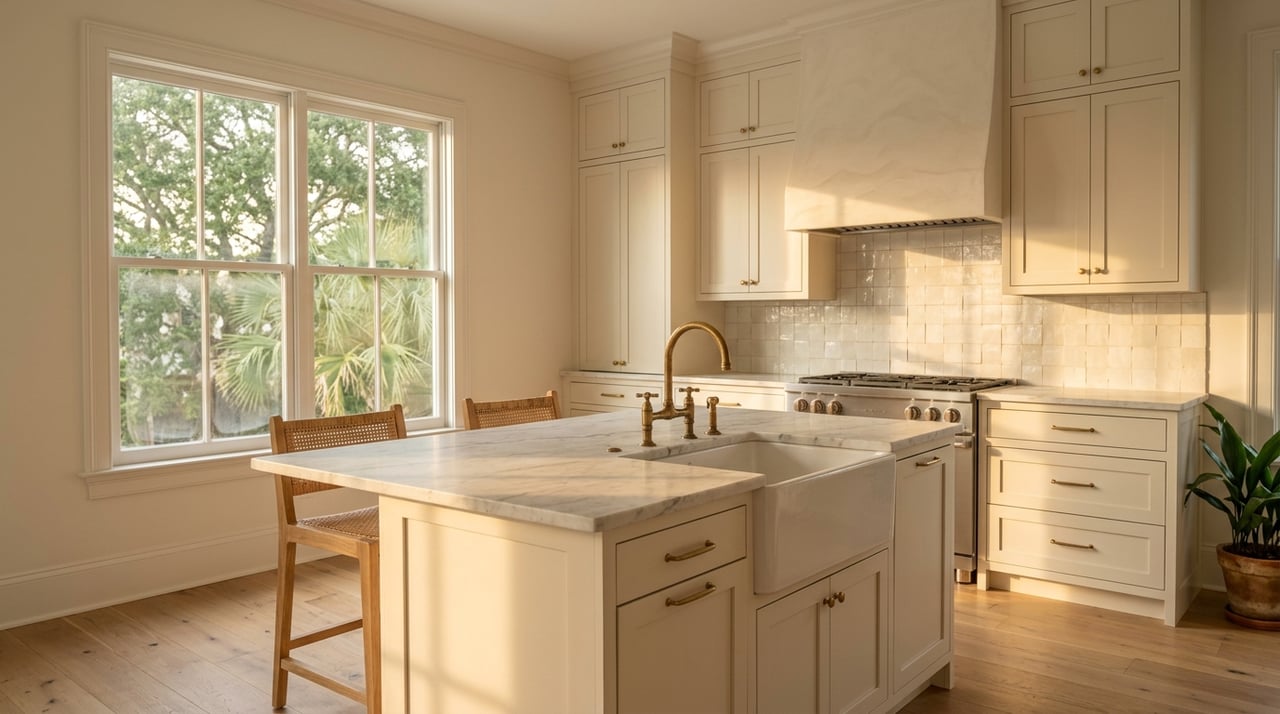
In practice, that means buyers and appraisers do not simply reward spending. They look at how well the work was done and whether it suits the home itself. In a historic or architecturally significant property, a polished renovation that respects original materials and design can support value more effectively than flashy updates that feel out of place.
This is especially important in Charleston, where architectural consistency often carries weight. A luxury buyer may see authentic details, thoughtful restoration, and appropriate exterior work as part of the home’s lasting value.
What the Current Market Says
The broader Charleston market has become more negotiable. Realtor.com reported that in March 2026, Charleston had about 1,355 homes for sale, a 98% sale-to-list price ratio, a $650,000 median sale price, and 43 median days on market. It labeled Charleston a buyer’s market, with inventory up 17.12% year over year and days on market up 30.30% year over year.
That broader trend gives buyers more room to compare options and ask harder questions. It also means sellers need to be more precise about pricing and presentation. Overpricing is easier to spot when inventory is rising.
At the same time, the luxury market is not moving in exactly the same way. Realtor.com’s December 2025 luxury report said the entry point to luxury in the Charleston-North Charleston metro was just under $2.0 million, with high-end luxury near $3.0 million and ultra-luxury near $6.7 million. Those thresholds were down year over year, and the report noted that rising inventory and new listings were nudging the segment toward a more balanced state.
Charleston Luxury Is Not One Market
This is one of the most important points for both buyers and sellers. Charleston luxury is not a single, uniform market. The best-positioned homes can still move quickly, while other listings may sit longer if they miss the mark on pricing, presentation, or perceived risk.
The Institute for Luxury Home Marketing still classified Charleston’s luxury single-family and attached segments as seller’s markets in 2025. Yet the market also showed marketing times of 36 to 37 days, which suggests selectivity. Buyers are active, but they are not treating every luxury listing the same.
That makes micro-location and property-specific analysis especially important. A waterfront home, island property, historic residence, or specialty lot each competes on a different set of value drivers.
What Sellers Should Focus On
If you are selling a Charleston luxury home, broad averages are not enough to guide strategy. The strongest pricing decisions usually come from a close look at the exact property and its real competitive set.
Key value drivers often include:
- Water access and view quality
- Elevation and flood-zone context
- Historic character and architectural integrity
- Renovation quality and condition
- Scarcity within the immediate micro-location
- Current demand for that specific property type
For many luxury sellers, success comes from pairing careful pricing with thoughtful presentation. In a selective market, details matter. Buyers at this level tend to notice fit, finish, setting, and whether the asking price reflects the home’s true strengths.
What Buyers Should Watch Closely
If you are buying in Charleston’s luxury market, it helps to look past surface-level comparisons. A larger home is not automatically the better value if another property offers stronger location fundamentals or lower perceived risk.
As you compare homes, pay close attention to:
- The setting and surrounding land constraints
- Flood-zone designation and site elevation context
- Whether views or water access are protected or limited
- The quality and appropriateness of renovations
- How the property fits its architectural style and location
This kind of analysis can help you avoid overpaying for finishes while overlooking the factors that most influence long-term market appeal.
Why Local Expertise Matters
Charleston luxury homes often require more than a simple price-per-square-foot approach. Waterfront properties, historic homes, island residences, acreage, and custom-build lots all carry nuances that can affect demand, marketing, and negotiation.
That is why local, property-specific guidance matters so much in this market. When value depends on details like flood exposure, architectural integrity, view corridors, and scarcity, you want advice grounded in Charleston itself, not just broad market data.
Whether you are preparing to sell or trying to evaluate a purchase, understanding these value drivers can help you make clearer, more confident decisions. If you want tailored guidance on a Charleston luxury property, connect with Jack Huguley for a private consultation.
FAQs
What price range is considered luxury in Charleston?
- In the Charleston-North Charleston metro, the top 10% of listings started at about $1.96 million in Realtor.com’s December 2025 report, making luxury a local tier rather than a fixed national number.
How does flood risk affect Charleston luxury home values?
- Flood exposure can affect value, insurance requirements, and buyer confidence. The City of Charleston notes that AE and VE zones are in the Special Flood Hazard Area, while some properties outside mapped flood zones may still face drainage or sea-level-rise concerns.
Why do similar Charleston luxury homes have different values?
- Homes with similar size or finish can vary in value because Charleston buyers often weigh water access, views, elevation, flood exposure, architectural character, and renovation quality very heavily.
Do historic renovations increase value in Charleston?
- They can, especially when the work respects the home’s original architecture and materials. In Charleston, thoughtful updates that align with historic character are often more supportive of value than cosmetic changes that feel inconsistent.
Is Charleston a buyer’s or seller’s market for luxury homes?
- The broader Charleston market was labeled a buyer’s market in March 2026, but 2025 luxury data still showed seller-leaning conditions in Charleston’s luxury segment. The result is a more segmented market where some properties move faster than others.