What if the best part of Charleston’s waterfront lifestyle has nothing to do with a beach chair? In Charleston, water shapes daily life in ways that go far beyond oceanfront afternoons. If you are considering a move here, or simply want a clearer picture of what waterfront living really means, this guide will help you understand the rhythms, settings, and practical realities that define life on the water in the Lowcountry. Let’s dive in.
Water Shapes Charleston Living
In Charleston, water is not a side feature. It is part of how the city functions, feels, and grows. The City of Charleston Water Plan makes that clear by treating water as a citywide planning issue tied to flood risk, tides, sea level rise, stormwater, storm surge, groundwater, and the protection of sensitive landscapes.
That matters if you are buying here. Waterfront living in Charleston is as much about how you use the water and manage it as it is about the view. The result is a lifestyle that can feel historic, active, social, and deeply connected to the landscape.
Waterfront Life Beyond the Beach
Charleston offers many ways to enjoy the water without ever setting up on the sand. Harbor edges, riverfront parks, tidal creeks, marsh views, and working waterfronts all shape the experience. For many residents, these places define everyday life more than the beach itself.
That broader view of waterfront living is one reason Charleston appeals to so many buyers. You may want sunset walks, boating access, a fishing pier, or a dinner overlooking the harbor. In Charleston, those moments show up across the region in different ways.
Harbor Parks and Public Spaces
Some of Charleston’s most recognizable waterfront experiences happen in public spaces. Waterfront Park along the harbor includes garden rooms, swings, fountains, lawns, and a walking path that makes the water part of a normal afternoon, not just a special occasion.
Other parks offer a different take. The city’s park directory includes riverfront and harborfront settings such as Daniel Island Waterfront Park and Mount Pleasant Memorial Waterfront Park, where you will find trails, piers, and open views that draw people to the water year-round.
Marsh Views and Creekside Evenings
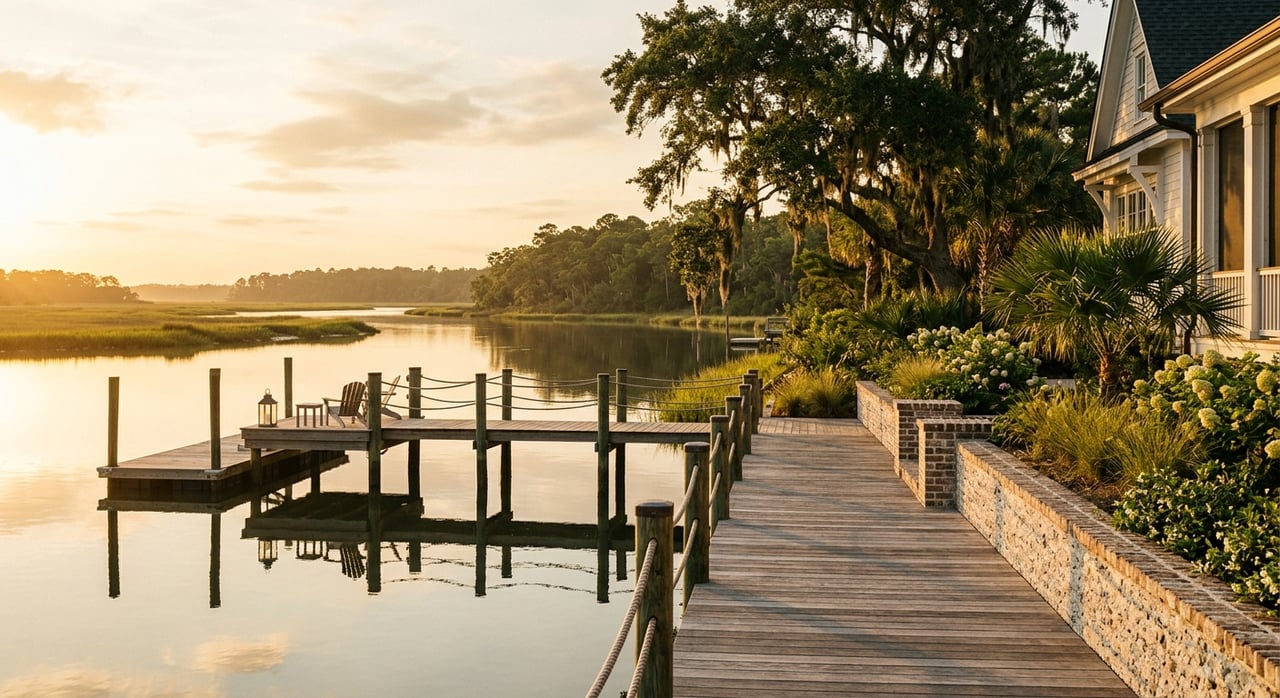
For many people, Charleston’s most memorable water views are found in the marshes and tidal creeks. These landscapes offer a quieter, more layered kind of beauty, with changing light, boat traffic, grasses, and wildlife shaping the scene.
Local visitor resources often highlight outings through the marsh behind Folly Beach, where Charleston Outdoor Adventures offers motorboat, kayak, and paddleboard trips through tidal creeks, including sunset options. It is a good reminder that in Charleston, waterfront living often means interacting with the marsh as much as the harbor.
Waterfront Dining and Social Life
In Charleston, dining on the water is part of the lifestyle pattern. It is not just about a special event. It can be part of your week, whether you are meeting friends, hosting family, or enjoying a quiet evening with a view.
The Charleston area includes waterfront dining experiences highlighted by the visitor bureau, including Charleston Crab House on Wappoo Creek, as well as harbor- and river-oriented settings like Charleston Harbor Fish House, Kingstide, and SpiritLine’s dinner cruise. These places show how water becomes part of the social fabric, not just the scenery.
Working Waterfront Traditions
Charleston’s waterfront also feels authentic because it is still tied to everyday work and tradition. Shrimp boats, fishing piers, marinas, and boat parades keep the water connected to local life.
Events like Mount Pleasant’s Blessing of the Fleet reflect that connection by honoring the shrimping and fishing industry through a boat parade and community gathering. Charleston’s Holiday Parade of Boats carries that same spirit into the holiday season, reinforcing that the water here is a lived space, not just a postcard view.
What Waterfront Can Mean for Buyers
One of the most important things to understand is that “waterfront” means different things in different parts of Charleston. A harbor-front setting offers a different daily rhythm than a marshfront home or a creekside property. The lifestyle fit often matters more than the label.
That is especially true for buyers who want more than a pretty backdrop. Access, boating potential, proximity to marinas, and the feel of the surrounding waterfront environment all shape how a property lives day to day.
Downtown Harbor Access
Downtown Charleston offers a waterfront lifestyle tied to civic spaces, walkability, and marina access. In addition to Waterfront Park, the city’s Charleston Maritime Center serves as a deep-water marina and access point within walking distance of the historic district, the market, and King Street.
For some buyers, that combination is the draw. You may value being close to restaurants, cultural attractions, and harbor views while still having practical access to the water. That creates a very different experience from a beach or suburban waterfront setting.
Creekfront and Working-Waterfront Areas
Creekside environments often bring a more active, local, and working-waterfront feel. Shem Creek is one of the clearest examples, known through Charleston visitor materials for its winding waterway, shrimp boats, restaurants, and dolphin sightings.
If that atmosphere appeals to you, a creekfront or creek-adjacent area may offer the right kind of energy. It can feel more connected to boating and daily waterfront activity than a view-oriented property that sits farther from launches or docks.
Riverfront and Marsh-Oriented Living
Riverfront and marsh-oriented settings offer yet another version of Charleston life on the water. Daniel Island is a strong example, with riverfront park space, a fishing pier, and a waterfront restaurant on the Wando River creating a lifestyle centered on access and views without being beach-focused.
For buyers looking across the broader Charleston area, this can be an appealing balance. You may get the calm, open feel of the water woven into daily life while staying focused on a residential setting rather than a resort atmosphere.
What to Look for in a Waterfront Property
When you begin comparing properties, it helps to look beyond the words “water view” or “waterfront.” In Charleston, those labels can describe very different experiences.
A useful starting point is to ask how the property connects to the water in practical terms. That often gives you a better sense of day-to-day value than the view alone.
Access Matters More Than You Think
Not every waterfront property offers the same kind of use. Some homes provide a visual connection to the water, while others are closer to marinas, public launches, docks, or piers that support boating and recreation.
Based on the city’s mix of waterfront parks, public piers, marina facilities, and working-waterfront areas, access type is often one of the biggest lifestyle differences between properties. If boating is part of your plan, this is one of the first things to clarify.
Water Type Changes the Experience
In Charleston, marshfront, creekfront, riverfront, harbor-front, and marina-adjacent homes each create a different rhythm. Marshfront settings may feel quieter and more natural. Harbor-front locations may feel more connected to the city and boat traffic.
That distinction matters because it affects how you spend time at home. Some buyers want broad sunset views and a peaceful edge. Others want to be close to a dock, a launch, or a lively waterfront setting.
The Practical Side of Waterfront Living
Charleston’s waterfront appeal is real, but so are the practical considerations. The city is direct about that in its water planning and resilience work. Buyers should be too.
The Water Plan and related WaterWise guidance focus on issues such as king tides, flood awareness, stormwater, and sea level rise. If you are buying near the water, understanding these conditions is part of making a smart decision.
Flood Awareness Is Essential
Buying near the water means looking closely at flood conditions and resilience, not just aesthetics. The city’s planning efforts reflect how important this is across Charleston, especially in areas shaped by tides, rain events, and stormwater flow.
One example is the Church Creek Basin effort described through the city’s water resources, where a former flood-prone area was converted into Bridgepointe Ecological Park with added stormwater storage. Projects like this show that water management is an active part of Charleston’s future, not a background issue.
Views and Use Are Not the Same
A beautiful view can absolutely add value to your lifestyle. Still, it is worth remembering that view-only properties and truly boat-oriented properties may deliver very different experiences.
If your goal is regular boating, paddle access, marina proximity, or dock use, those details deserve as much attention as the setting itself. In Charleston, that kind of clarity helps you match the property to the lifestyle you actually want.
Why This Matters in Charleston
Charleston stands out because its waterfront identity is broad and layered. You are not choosing only between beach and non-beach. You are choosing among harbor life, riverfront views, tidal creeks, marsh edges, marina access, and working-waterfront culture.
That variety is part of what makes the market so compelling. It also means buyers benefit from a local guide who understands the difference between a scenic water view and a property that truly supports the way you want to live.
If you are exploring waterfront, marshfront, creekfront, or harbor-adjacent property in Charleston, Jack Huguley offers experienced, locally rooted guidance to help you evaluate lifestyle fit, access, and the details that matter most.
FAQs
Is Charleston waterfront living only about the beach?
- No. Charleston’s waterfront lifestyle also includes harbor parks, riverfront spaces, marsh views, tidal creeks, waterfront dining, marinas, and working-waterfront traditions.
Where can you enjoy water views in Charleston beyond the beach?
- Popular examples include Waterfront Park, Daniel Island Waterfront Park, Mount Pleasant Memorial Waterfront Park, Shem Creek, and marsh or creekside sunset outings.
What should buyers compare when looking at Charleston waterfront homes?
- You should compare access type, water type, marina or dock proximity, and flood awareness along with the view and location.
What makes Charleston’s waterfront lifestyle feel authentic?
- Working shrimp boats, fishing piers, public docks, community boat events, and everyday access to creeks, rivers, and the harbor all contribute to that sense of authenticity.
Why does flood resilience matter for Charleston waterfront property?
- The city’s water planning highlights tides, stormwater, sea level rise, storm surge, and groundwater, so resilience and flood awareness are important parts of buying near the water.