Buying a historic home in Charleston can feel equal parts exciting and overwhelming. You may love the charm right away, then wonder what you are actually looking at when a listing says “single house,” “Greek Revival,” or “Colonial Revival.” The good news is that once you understand the main styles and the city’s preservation framework, you can shop with far more confidence. Let’s dive in.
Why home style matters in Charleston
In Charleston, architectural style is not just about curb appeal. It often shapes how a home lives, what details may be historically significant, and what changes may need review after you close.
The city’s survey materials describe a layered historic housing stock that includes Georgian, Federal, Greek Revival, Neoclassical Revival, Italianate, Victorian, Craftsman, and Colonial Revival resources. Charleston also evaluates neighborhoods through Area Character Appraisals that look at style, form, scale, mass, rhythm, landscape, and cultural context.
For you as a buyer, that means two homes with similar square footage can offer very different layouts, maintenance needs, and renovation paths. Knowing the basic form of a house helps you ask better questions before you make an offer.
Understand Charleston’s preservation rules
Before you focus on columns, piazzas, or rooflines, start with the review process. Charleston’s Board of Architectural Review, or BAR, reviews new construction, alterations, and renovations that are visible from the public right-of-way.
The city defines “visible from the public right-of-way” as what can be seen by the naked eye from street level. In practical terms, planned exterior work may matter just as much as the house’s interior condition.
Ordinary maintenance or repair of exterior elements is exempt. For work that does require approval, an approved project receives a Certificate of Appropriateness.
Some smaller items are often handled by staff rather than the full board. The city notes that painting, sitework, signage, and small repairs may fall into that category, but you should still confirm what applies to a specific property.
Ask about private restrictions too
City review is not always the only layer. Some historic properties also have private preservation easements or deed-level restrictions that future owners must follow.
That matters because restrictions can extend beyond what the city reviews. In one Charleston example cited by Historic Charleston Foundation, protected features included original floors, windows, plaster walls, ornamental plasterwork, and crown moldings.
Charleston single houses explained
If there is one residential form most closely tied to Charleston, it is the Charleston single house. This house type developed in the late 18th and early 19th centuries as a response to narrow lots and the city’s humid climate.
In the classic plan, the house is one room wide, with two main rooms flanking a central stair hall. A single- or two-story piazza runs along one of the long sides, most often the south side, to provide shade and support cross-ventilation.
From the street, a single house can appear narrow. Once you see the side elevation or rear yard, the home often reads as much deeper than first expected.
What a single house feels like inside
Inside, you should expect a stronger connection between the rooms and the side porch than you would find in a more typical suburban layout. Windows opening onto the piazza helped move breezes through the house, and the floor plan was shaped around that relationship.
Charleston’s survey materials also note that single houses could wear different architectural “dress.” You may see this form paired with Adam, Greek Revival, or Victorian details, which is one reason style labels in Charleston can overlap.
What to check on a single house
When you tour a Charleston single house, ask about the parts that most affect both character and future upkeep:
- Whether the piazza is original, repaired in kind, or rebuilt
- Whether the roof, windows, chimneys, and shutters have been replaced
- Whether rear dependencies are historic or later additions
- Whether additions changed the side-yard relationship or ventilation pattern
- Whether prior exterior work required BAR approval
Charleston’s ordinance specifically identifies features such as roofs, chimneys, siding, windows, doors, shutters, walls, and fences as character-defining elements. Those details are not minor when you are evaluating long-term ownership.
Row houses and attached townhouses
Charleston buyers also encounter row houses and attached townhouses, especially in denser parts of the peninsula. The city describes row houses as buildings that share a party wall with at least one neighbor and fit well within a compact urban setting.
Examples date to the 18th and 19th centuries, but the form continued later too. Charleston’s survey notes that row houses were still being built through the mid-1970s, so a row-style home may look older than it actually is.
That is an important distinction for buyers. The exterior may suggest early historic fabric, while the actual construction date or design intent may be much later.
How row houses often read in listings
Because row houses are narrow and attached, they often feel more vertical than detached homes. They may also extend farther to the rear of the lot than you would expect from the street view.
Early examples are often Georgian or Federal. Later examples can include Colonial Revival interpretations that were designed to echo older Charleston buildings.
What to ask on a row house showing
Focus on the structure and the plan:
- Are the party walls intact?
- How much of the original layout survives?
- Have later additions changed parapets or rooflines?
- Is it an early row house or a later interpretation of the form?
Those answers can affect both authenticity and your future renovation options.
Greek Revival and Neoclassical Revival homes
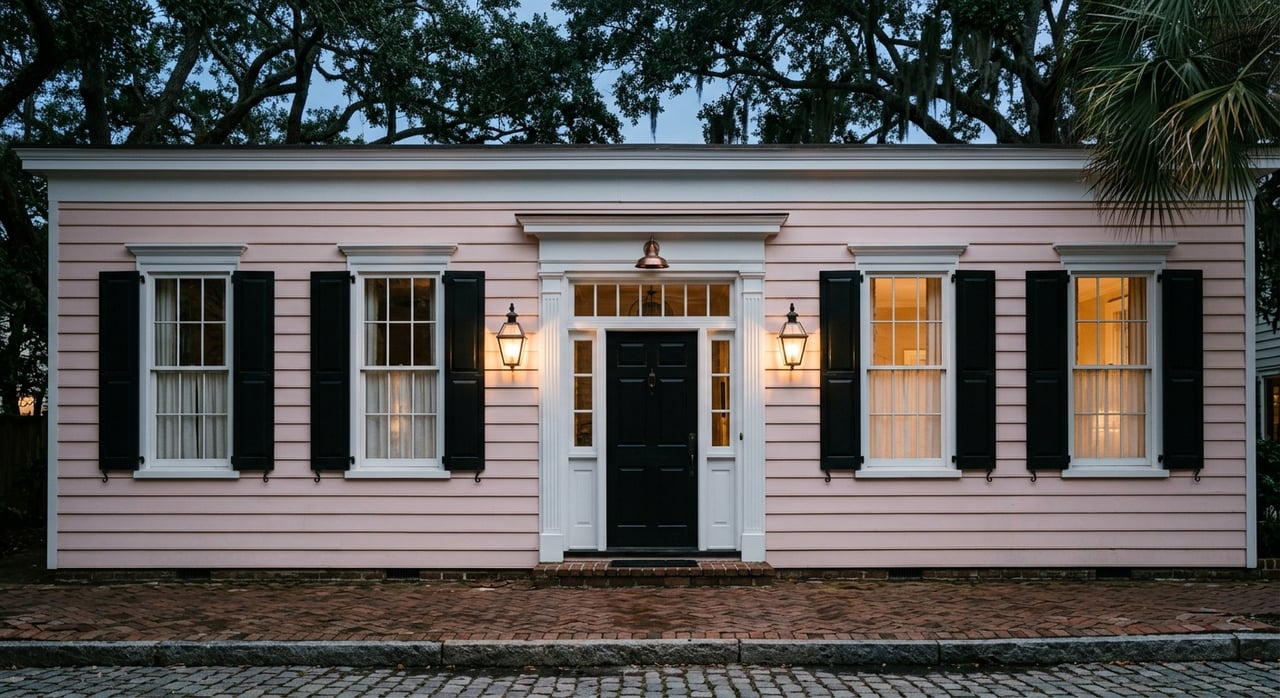
Charleston’s survey materials describe Greek Revival and Neoclassical Revival as mid-19th-century styles that introduced classical forms and motifs. These homes often catch a buyer’s eye because they can feel formal, balanced, and substantial.
Greek Revival architecture is associated with classical Greek temple references, including boxy rectangular massing, pedimented roofs, and columned porches or projected entrances. In smaller homes, those features may appear in a simplified way rather than as a full temple-front composition.
In Charleston, these styles are often layered onto earlier forms. A house may have an older Georgian or Federal core and later Greek Revival updates.
Why interiors matter as much as exteriors
With revival-era homes, the floor plan can be just as important as the façade. Guidance referenced in the research notes that many 19th-century Greek Revival houses have large rooms flanking a central hall, with character-defining interior features such as mantels, trim, plasterwork, staircases, and room sequences.
That means you should look beyond the front porch. The flow from hall to parlor to stair can tell you as much about the home’s significance as the columns outside.
Charleston homes can be layered over time
Charleston examples show how much these properties can evolve. Some houses were renovated mid-century, with entrances moved and parlors reworked in a stronger Greek Revival style.
Others retained not just the main house, but also kitchen buildings, carriage blocks, laundries, or other rear structures. For buyers, that is a reminder that a historic Charleston property may function more like a small compound than a single isolated building.
Colonial Revival homes in Charleston
Colonial Revival is another style buyers are likely to see often. Charleston’s survey materials note that it was well represented from the 1880s forward and remained popular through the 1970s.
This matters because Colonial Revival homes can overlap visually with much older architecture. In some cases, a home may be a later building designed to feel compatible with its historic surroundings rather than an early-period structure.
That does not make it less appealing. It simply means you should confirm the home’s date, form, and evolution rather than rely on appearance alone.
Use the city’s historic tools to read a house
Charleston maintains a Historic Resources Survey and Architectural Inventory to identify historic structures and guide review. The city also uses Area Character Appraisals to explain neighborhood character through context, scale, mass, rhythm, streetscape, landscape, and cultural elements.
For you, these tools can help answer a few practical questions:
- Is the home a contributing historic resource?
- Is it a later compatible infill building?
- Has it been heavily altered over time?
- How does it fit the surrounding streetscape?
Those answers can shape your expectations around value, future projects, and preservation review.
Smart questions to ask before you buy
When you tour a historic property in Charleston, keep your questions focused and specific. A beautiful showing is helpful, but clarity on form, condition, and review history is what protects you.
Here are some of the most useful questions to ask:
- Which BAR district or historic review applies to this property?
- Are there any easements or deed restrictions beyond city review?
- What exterior changes are visible from the public right-of-way?
- Has recent work already received a Certificate of Appropriateness?
- Which exterior features are original, repaired in kind, or replaced?
- What do survey cards, historic inventory records, Area Character Appraisals, Sanborn maps, or prior permits say about the house?
- Are the major room sequences, halls, and stair features still intact?
- If there is a rear dependency or service wing, is it historic or a later addition?
The goal is not to memorize architecture terms. It is to understand what you are buying, what gives it character, and what may affect your plans after closing.
Historic homes in Charleston offer something hard to replicate: architecture shaped by climate, urban form, and centuries of change. If you understand the difference between a single house, a row house, and a revival-era property, you can evaluate listings with a clearer eye and make better decisions when the right home appears.
If you are considering a historic purchase on the peninsula or elsewhere in the Charleston market, Jack Huguley offers locally rooted, high-touch guidance to help you evaluate character, context, and the practical details that matter before you buy.
FAQs
What is a Charleston single house in Charleston, SC?
- A Charleston single house is a narrow home form developed for Charleston’s lots and climate, typically one room wide with a central stair hall and a side piazza designed for shade and airflow.
What does the Charleston Board of Architectural Review do for historic homes?
- The Board of Architectural Review reviews new construction, alterations, and renovations visible from the public right-of-way, and approved work receives a Certificate of Appropriateness.
What should buyers ask about changes to a Charleston historic home?
- You should ask which exterior features are original or replaced, whether prior work received BAR approval, and whether there are any easements or deed restrictions beyond city review.
How can buyers tell if a Charleston row house is truly historic?
- Buyers should confirm the construction date, review city survey or inventory information, and ask whether the home is an early row house or a later Colonial Revival interpretation of the form.
Why do interior layouts matter in Charleston revival-style homes?
- In many revival-era homes, the central hall, parlors, stair sequence, trim, mantels, and plaster details are key parts of the home’s historic character, not just the exterior appearance.